Water Heater Repair & Installation in Lyndon, KY
Licensed Master Plumber contractors serving Jefferson County. Emergency water heater repair, replacement, and installation available 24/7.
Emergency Guidance
Gas odor near your water heater?
Evacuate immediately. Call 911 + gas company.
Active flooding from water heater?
Shut off water. Call +1-888-387-1216 for emergency routing.
24/7 Emergency
Always available when you need us
Licensed & Insured
KY Master Plumber contractors
Satisfaction Guaranteed
5-star rated service quality
Serving Lyndon
Jefferson County & surroundings
Lyndon's housing stock creates distinct water heater challenges that differ from the rest of Kentucky. Homes built during the region's growth periods often feature original or aging water heater installations now operating decades beyond their intended lifespan. Local water chemistry, whether municipal supply or well-based systems, accelerates component wear in ways that surprise homeowners accustomed to national replacement timelines. Winter temperature swings reduce incoming water temperatures to the low 40s, cutting effective hot water capacity by 20-30% just when demand peaks. Summer humidity creates condensation on supply lines that homeowners mistake for tank leaks, delaying necessary repairs while actual problems worsen.
We connect Lyndon residents across 40242, 40223, 40222, and 40252 with Kentucky Master Plumber-licensed contractors who understand these local conditions. Our network provides 24-hour emergency response for active leaks and no-hot-water calls, plus scheduled service for replacements and upgrades. Contractors in our network serve neighborhoods throughout Jefferson County, bringing the permits, code knowledge, and equipment access that turn a stressful failure into a resolved problem within hours.
The difference between a $200 repair and a $1,200 emergency replacement often comes down to recognizing warning signs early. Lyndon homeowners who catch sediment buildup, anode rod depletion, or pressure valve issues during routine checks extend tank life by 3-5 years. Those who ignore rumbling sounds or discolored water end up replacing units that could have been maintained. Local water conditions make this timing more critical here than in areas with softer water or newer housing stock.
Need Help Now?
Talk to a licensed plumber in Lyndon
call+1-888-387-1216Free diagnostic quotes • No obligation
location_onZIP Codes Served
Is Your Lyndon Water Heater Problem an Emergency?
If you smell gas, see active flooding, or hear a carbon monoxide alarm, evacuate immediately and call 911—then call us for the repair. For other water heater problems in Lyndon, use this guide to determine whether you need emergency service right now, same-day response, or scheduled repair within a few days.
Immediate Emergency (Evacuate and Call Now)
Natural gas odor near the water heater: Leave your home immediately. Do not search for the leak source, flip light switches, or use your phone indoors. Once safely outside, call 911 and your gas utility. After the gas company clears your home, call +1-888-387-1216 for emergency water heater service. Gas leaks near water heaters often originate from corroded supply lines, failed gas valve seals, or loose fittings—all requiring professional repair before you can safely restore service.
Active flooding (more than pooling water): If water is spreading rapidly across your floor, shut off the cold water supply valve at the top of the tank (turn clockwise) or locate your home's main water shutoff. Move valuables away from water, turn off electricity to the water heater at the breaker panel if you can reach it safely, and call +1-888-387-1216 for immediate response. Tank ruptures and supply line failures cause thousands of gallons of water damage within hours. Fast containment matters.
Carbon monoxide alarm activation: Evacuate all occupants and pets. Call 911. Faulty water heater venting is a common CO source in homes. Backdrafting, blocked flues, and cracked heat exchangers allow exhaust gases to enter living spaces instead of venting outdoors. Do not return until emergency responders confirm safe CO levels. We'll inspect venting systems, draft hoods, and combustion chambers to identify and eliminate the source.
Urgent (Same-Day Service Needed)
No hot water with pilot light out: If your gas water heater's pilot light won't stay lit or won't relight after following manufacturer instructions, you likely have a thermocouple failure, gas valve problem, or venting issue. While not immediately dangerous if you don't smell gas, a failed pilot means no hot water until repair. Call +1-888-387-1216 for same-day diagnosis and repair in Lyndon. Most pilot light issues are resolved within 2-3 hours of the service call.
Water leaking from top fittings or connections: Leaks from the cold water inlet, hot water outlet, or temperature/pressure relief valve are often repairable if caught early. Turn off the water supply valve at the tank, place towels or a bucket to catch drips, and schedule same-day service. Top leaks rarely indicate tank failure—they usually involve loose threaded connections, worn washers, or faulty relief valves. Delaying repair allows minor leaks to worsen and can lead to ceiling damage in homes where water heaters sit in attics or upper-floor closets.
Loud popping, rumbling, or banging sounds: These noises indicate significant sediment accumulation at the tank bottom. Sediment creates steam pockets during heating cycles, causing the popping sounds you hear. Left unaddressed, sediment accelerates tank corrosion and reduces heating efficiency. Schedule a flush and inspection within 24 hours. In Lyndon's water conditions, sediment problems caught early often extend tank life by 3-5 years. Ignored, they lead to premature tank failure.
Discolored or rust-colored hot water: Rusty water from hot taps only (not cold) signals anode rod depletion or internal tank corrosion. This is your water heater's warning that it's approaching failure. Schedule inspection within 1-2 days. If caught at the anode rod stage, replacement costs $150-$250 and adds years to your tank's life. If rust indicates tank corrosion, you're looking at replacement, but acting quickly prevents a catastrophic leak that damages flooring, drywall, and belongings.
Scheduled Service (Next 1-3 Days)
Running out of hot water faster than normal: When your household's hot water supply no longer meets demand—showers turning cold, dishwasher and laundry timing conflicts—you're dealing with either sediment buildup reducing capacity, a failing heating element (electric), or a malfunctioning burner (gas). While frustrating, this isn't an emergency. Schedule service within the next few days for diagnosis and repair. Most capacity issues are resolved with element replacement ($200-$350) or tank flushing ($150-$200) rather than full replacement.
Water heater is 10+ years old with no current problems: Preventive replacement before failure avoids emergency situations during holidays, cold snaps, or when you're hosting guests. Water heaters rarely provide warning before catastrophic failure. If your unit has reached or exceeded its expected lifespan, schedule a replacement consultation. Planned replacement costs less than emergency replacement (no after-hours premiums), allows time to research rebates and efficiency upgrades, and lets you choose installation timing that fits your schedule.
Slightly higher utility bills without usage changes: Gradual efficiency loss from sediment buildup or failing heating elements increases energy costs before causing complete failure. If your gas or electric bills have climbed 15-20% without corresponding usage increases, schedule maintenance inspection. Catching efficiency problems early often means repair rather than replacement.
Response Times Across Lyndon
Emergency response to neighborhoods throughout Moorland, Bellemeade, Briarwood, Meadowbrook Farm, Wildwood, Plantation, Rolling Hills, Norwood, Langdon Place, Meadow Vale, Graymoor-Devondale, and Murray Hill typically arrives within 30-60 minutes of your call, depending on current service demand and your location. Same-day service requests scheduled during business hours are usually completed within 2-4 hours. We coordinate with licensed contractors who stock common repair parts on their trucks, which means most repairs are completed during the initial visit rather than requiring return trips for parts.
For scheduled service, we offer appointment windows that fit your availability, typically within 1-3 business days of your call. When you contact +1-888-387-1216, you'll speak with someone who can assess your situation, recommend the appropriate urgency level, and dispatch service accordingly.
What to Do While Waiting for Service
If you've shut off your water heater's water supply or gas valve, do not attempt to restart it before professional inspection. Take photos of any leaks or damage for insurance documentation. Clear the area around your water heater so technicians can access it easily—this speeds diagnosis and repair. If you have an electric water heater and have turned off the breaker, label it so no one turns it back on while the tank is empty or leaking.
For gas odor situations, remember: your safety matters more than your water heater. Never prioritize property over personal safety. Gas leaks require utility company clearance before any contractor can begin work. We'll be ready to repair or replace your water heater as soon as it's safe to do so.
Interactive Tool: Check Your Symptoms
Select your symptom below for immediate guidance and the right next step.
What problem are you experiencing?
Emergency water heater repair in Lyndon, Jefferson County is available around the clock. If your water heater is leaking, producing no hot water, or making unusual noises, ourKentucky Master Plumber-licensed contractors can be at your door within 30 minutes. Call +1-888-387-1216 now for immediate dispatch to your Lyndon address.
Common Water Heater Problems in Lyndon Homes
From failing heating elements tripping breakers to corroded anode rods causing rusty water, Lyndon's local water characteristics play a direct role in these common failures. Understanding which problems stem from water chemistry versus normal wear helps homeowners make smarter repair-versus-replacement decisions and catch issues before a minor leak becomes a flooded basement.
Hard Water Accelerates Component Failure
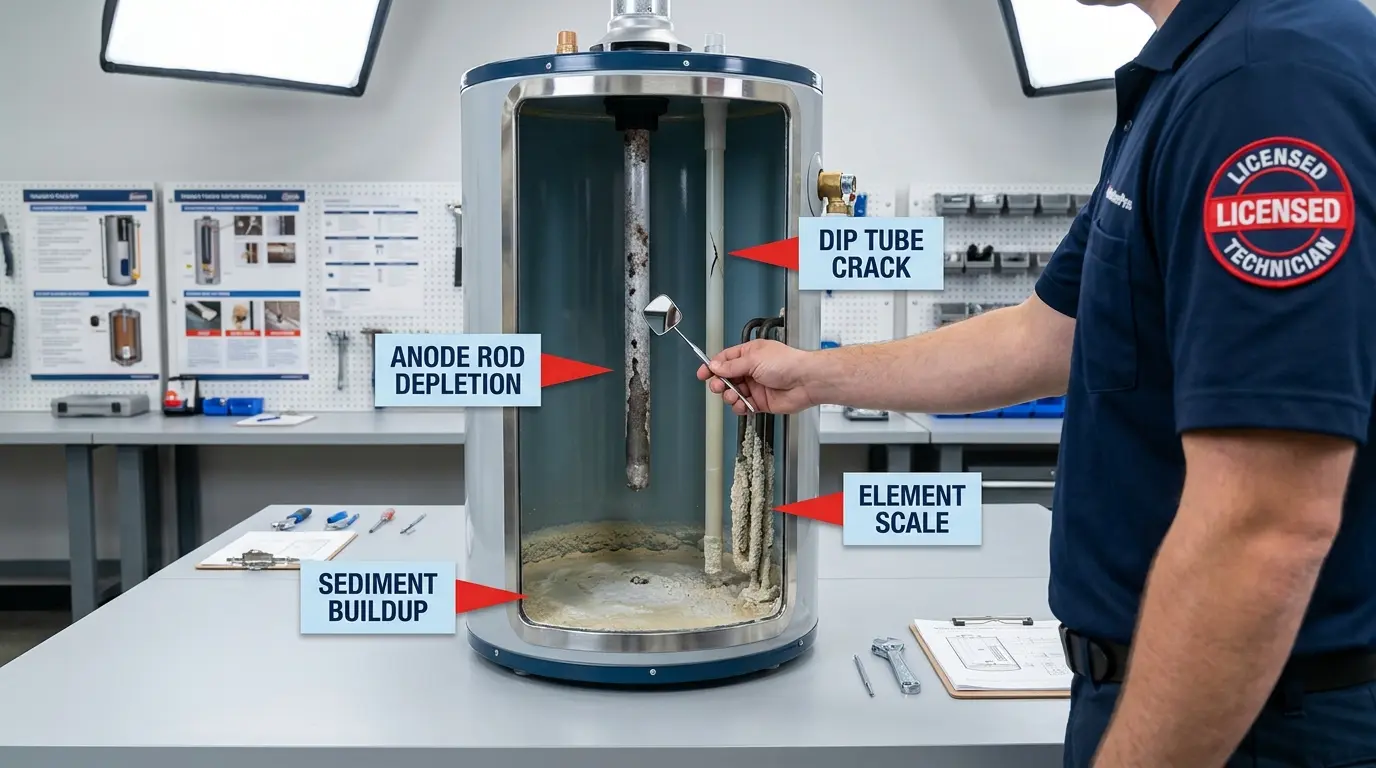
Hard water—water with elevated calcium and magnesium content—shortens water heater lifespan through a chemical process most homeowners never see until it's too late. When hard water heats above 140°F inside your tank, dissolved minerals precipitate out of solution and form solid deposits. These deposits accumulate in three critical areas: coating the tank bottom in thick sediment layers, encrusting heating elements in rock-hard scale, and rapidly depleting the sacrificial anode rod that protects your tank from corrosion.
The popping or rumbling sound you hear? That's sediment-trapped water flashing to steam beneath the mineral layer—literally boiling pockets of water under the scale bed. This sustained heat concentration weakens tank steel and accelerates failure at the weld seams. The popcorn-popping noise signals you're months away from a leak if you don't flush the tank and restore proper heat transfer.
Hard water cuts anode rod life dramatically. In soft water conditions, a magnesium anode rod lasts 5-7 years. In hard water, that same rod depletes in 3-4 years, sometimes less. Once the anode rod is consumed, the tank itself becomes the sacrificial metal—rust begins within months, and you'll see it as brown or rust-colored hot water from your taps. At that point, you're replacing the water heater, not repairing it.
Heating elements in electric water heaters fail faster in hard water because scale insulates the element from the water it's trying to heat. The element overheats, the internal coil fails, and your breaker trips. Replacing a $40 heating element is simple. Replacing it every 18 months because you never addressed the water hardness is expensive and avoidable.
Pressure relief valves calcify in hard water conditions. Mineral buildup prevents the valve from sealing properly, causing a constant drip that homeowners often ignore. A dripping T&P valve isn't just annoying—it signals that the valve may not open during an actual overpressure event, creating a safety hazard. Replacing the valve costs $150-$200. Ignoring it risks tank rupture.
Sediment Buildup Reduces Capacity and Efficiency
Every water heater accumulates sediment. The rate depends on your water source and mineral content, but the result is universal: reduced capacity, longer heating times, higher energy bills, and accelerated tank failure. Sediment settles at the tank bottom, displacing water volume and insulating the burner or lower heating element from the water above.
In a 50-gallon tank with six inches of compacted sediment, you've effectively got a 40-gallon tank. Your showers run out of hot water faster. Your dishwasher runs cold mid-cycle. You blame the water heater's age when the real problem is sitting at the bottom, fixable with a $150 flush service.
Gas water heaters with sediment buildup develop hot spots on the tank floor directly above the burner. These localized high temperatures weaken the steel and accelerate corrosion at the tank bottom—the most common leak location. You'll see water pooling around the base, and at that point, replacement is your only option.
Sediment also traps water beneath its layer. When the burner fires, that trapped water superheats and flashes to steam, causing the rumbling or knocking sounds that worry homeowners enough to call for service. The sound itself isn't dangerous, but it's a warning. Left unaddressed, the thermal stress cracks tank welds or corrodes the steel from the inside.
Annual flushing removes sediment before it hardens into a concrete-like mass. After three years without flushing, sediment often compacts so thoroughly that it won't drain through the valve. At that point, you're looking at water heater replacement years earlier than necessary.
Well Water Introduces Iron, Sulfur, and Sediment Challenges
Homes on well water face water heater problems that municipal water users rarely encounter. High iron content stains tanks, clogs valves, and accelerates anode rod depletion. Sulfur bacteria produce hydrogen sulfide gas, creating the infamous rotten egg smell in hot water. Sediment loads from well water often exceed municipal supply by 10-fold or more.
Iron bacteria colonize water heaters, forming slimy orange or reddish-brown deposits inside the tank and on components. These biofilms corrode metal, clog pressure relief valves, and require aggressive flushing or even tank replacement in severe cases. If your hot water has a metallic taste or leaves orange stains on fixtures, iron is destroying your water heater from the inside.
Sulfur bacteria thrive in the warm, oxygen-depleted environment inside your water heater tank. They metabolize sulfates in well water and produce hydrogen sulfide—the rotten egg smell. The smell is most noticeable in hot water because heat releases the gas. Replacing the standard magnesium anode rod with an aluminum-zinc alloy rod often eliminates the smell by changing the electrochemical environment that sulfur bacteria need.
Well water sediment loads overwhelm water heaters not designed for heavy particulate content. Sand, silt, and mineral particles settle faster and compact harder than calcium carbonate from hard water. Well water systems need pre-filtration and sediment traps before the water heater, plus twice-annual flushing instead of the annual schedule sufficient for municipal water.
Aging Housing Stock and Outdated Venting Systems
Older homes often have water heaters installed decades ago under different code requirements. Venting systems that met 1980s standards fail modern safety and efficiency requirements. Single-wall vent connectors, shared flues with furnaces, and undersized chimneys create draft problems that shorten water heater life and pose carbon monoxide risks.
Atmospheric vent water heaters rely on natural draft—hot exhaust gases rising through the flue by buoyancy alone. When the chimney is shared with a high-efficiency furnace, the furnace's induced draft fan can create negative pressure that prevents the water heater from venting properly. Exhaust gases spill into the home instead of going up the flue. Soot marks above the draft hood signal spillage. Carbon monoxide buildup follows.
Undersized flues restrict exhaust flow, causing incomplete combustion and premature heat exchanger failure. The burner runs oxygen-starved, producing carbon monoxide and sooting up the combustion chamber. You'll see yellow flames instead of blue, and soot accumulation on the burner and pilot assembly. This isn't a DIY fix—it requires venting system redesign and often power vent water heater conversion.
Corroded vent connectors fail catastrophically. Single-wall galvanized vent pipe rusts through from condensation, dropping holes that leak exhaust gases into living spaces. Code now requires double-wall type B vent for safety, but older installations remain legal until replacement. When replacing an old water heater, expect vent connector upgrades as part of bringing the installation to current code.
Climate Impact: Winter Demand and Summer Humidity
Kentucky's seasonal temperature swings create distinct water heater challenges. Winter incoming water temperatures drop to 38-42°F, reducing your water heater's effective capacity by 25% just when demand peaks for hot showers and holiday dishwashing. Summer humidity causes condensation on cold water supply lines that homeowners misdiagnose as tank leaks, delaying real maintenance.
Cold inlet water in January requires more energy and time to reach 120°F than 60°F inlet water in July. Your 50-gallon tank effectively delivers 35-40 gallons of hot water in winter versus 50 gallons in summer. Families that never run out of hot water in August suddenly face cold showers in January—not because the water heater failed, but because demand exceeded capacity.
Recovery time—how long it takes to reheat the tank after use—doubles in winter. A gas water heater that recovers in 30 minutes during summer takes an hour in January. Stagger your hot water use accordingly, or consider upgrading to a larger tank or tankless system.
Summer humidity creates condensation on cold water supply lines and the bottom of the tank where cold water enters. Homeowners see water droplets, assume the tank is leaking, and call for emergency service. The technician wipes the condensation, explains the physics, and charges a service call fee. Real leaks show water pooling on the floor and dripping steadily regardless of humidity. Condensation appears and disappears with weather changes.
Crawlspace and garage installations in unheated spaces face freeze risk when temperatures drop below 40°F for extended periods. Pressure relief valve discharge pipes freeze first because they're exposed and filled with standing water. Frozen discharge pipes can't release pressure if needed, creating a safety hazard. Insulating discharge piping and the cold water supply line prevents freeze damage.
Power Vent and Direct Vent Mechanical Failures
Power vent and direct vent water heaters use fans to exhaust combustion gases, allowing installation in locations where atmospheric venting won't work. The added complexity brings new failure modes: blower motors burn out, pressure switches fail, circuit boards malfunction, and intake screens clog. These components cost $200-$500 to replace and require a technician with specific training.
Pressure switches sense proper draft before allowing the burner to fire. When the switch fails, the burner won't light even though nothing else is wrong. Pressure switch failure often results from condensation corrosion or debris blocking the sensing tube. Cleaning or replacing the switch restores operation, but misdiagnosis leads to unnecessary parts replacement.
Blower motors fail from bearing wear, overheating, or electrical issues. A failed blower means no hot water because the safety interlock prevents burner operation without verified draft. Blower motor replacement requires matching the exact voltage, amperage, and mounting configuration—not a universal part. Expect 2-3 day lead time for the correct replacement motor.
Intake air screens on direct vent units clog with cottonwood seeds, leaves, insect nests, and dust. Blocked intake air starves the burner of oxygen, causing incomplete combustion, sooting, and eventual lockout. Check and clean the intake screen quarterly—a five-minute task that prevents a $300 service call.
Control boards on modern power vent and tankless units manage ignition sequences, safety interlocks, and temperature control. Board failures show up as error codes or complete non-operation. Replacing a control board costs $400-$600 installed. Power surges from lightning storms or grid fluctuations cause most board failures. Whole-house surge protection is cheaper than replacing control boards.
Comprehensive Water Heater Solutions
From emergency repair to tankless upgrades, our licensed contractors handle every water heater need in Lyndon with code-compliant, warranty-backed work.
Installation
Expert sizing and installation of standard gas and electric water heaters with all permits included.
Learn More arrow_forwardRepair
Fast, reliable diagnostics and repair for leaks, no hot water, and pilot issues.
Learn More arrow_forwardTankless
High-efficiency tankless upgrades for endless hot water and space savings.
Learn More arrow_forwardMaintenance
Annual flushing and anode rod inspections to extend heater lifespan.
Learn More arrow_forward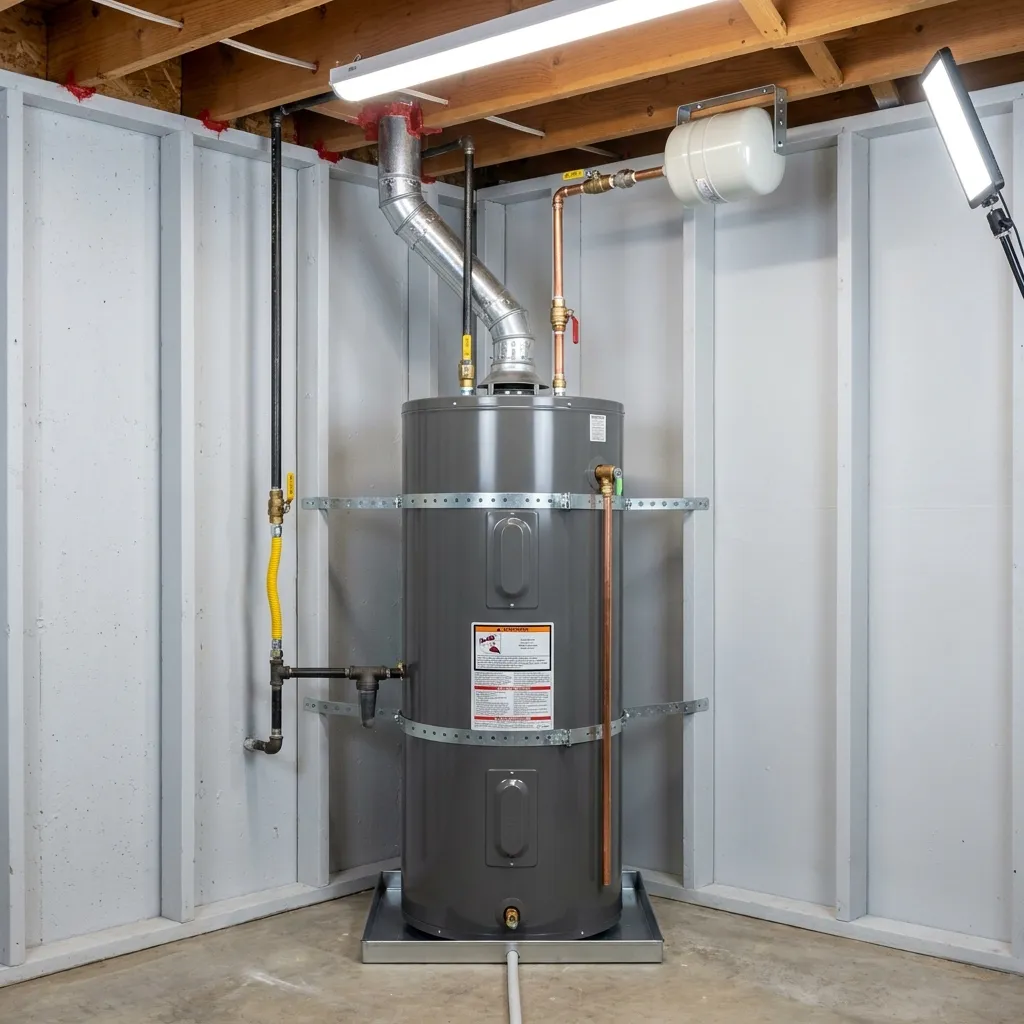
Tank Water Heater Services in Lyndon
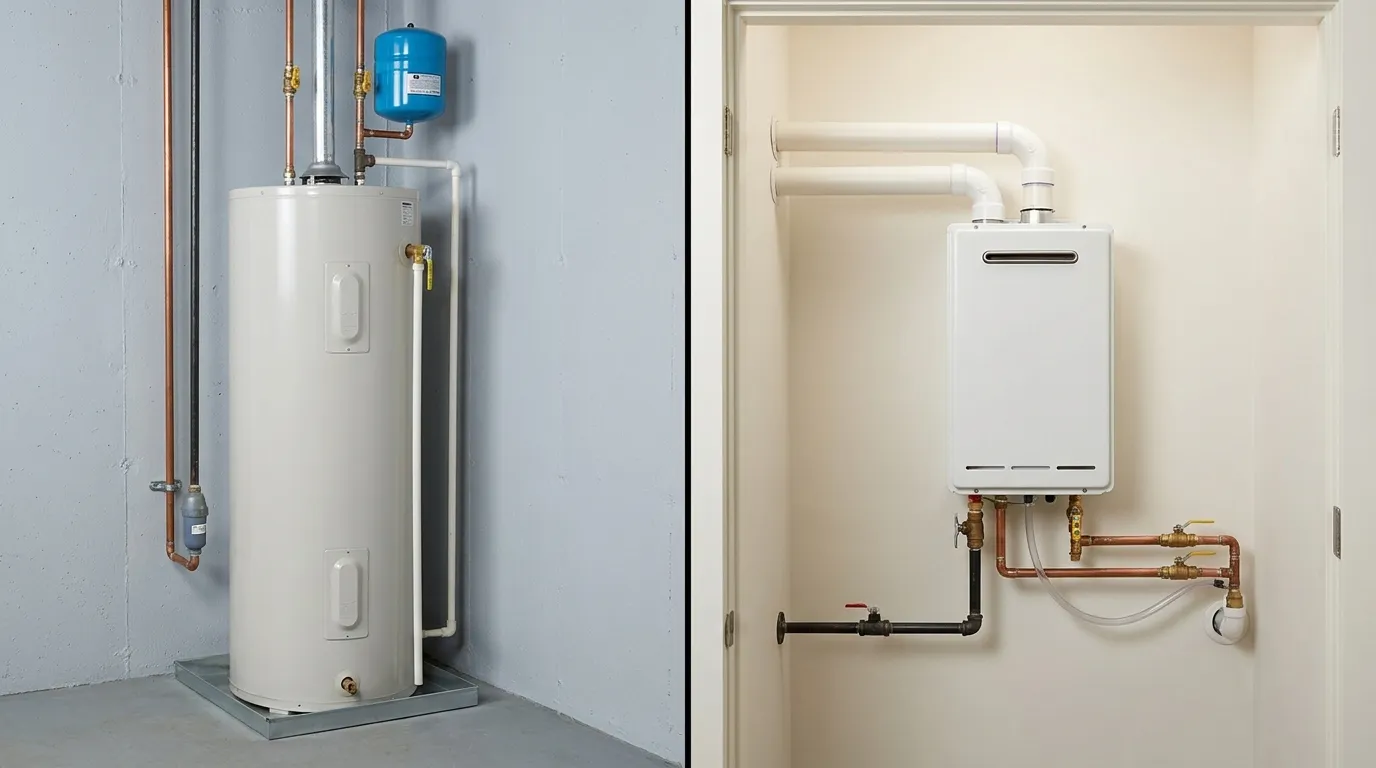
For most Lyndon homes, a 40 or 50-gallon tank water heater offers the lowest upfront cost and simplest repair path, especially for homes with 1/2-inch gas lines or 100-amp electrical panels common in older construction. Tank water heaters remain the workhorse solution across Jefferson County because they work with existing infrastructure, require no circuit upgrades, and deliver predictable performance homeowners understand.
When Tank Water Heaters Make Sense in Lyndon
Tank systems suit Lyndon households when budget matters, infrastructure limitations exist, or simplicity outweighs efficiency gains. Homes built before 1990 typically have gas lines sized for atmospheric vent tanks but not the higher BTU demands of tankless units. Electrical panels under 150 amps lack capacity for electric tankless without costly upgrades. Well water systems with variable pressure perform more reliably with tank storage than tankless units sensitive to flow rate fluctuations.
A family of four using 80-100 gallons daily operates comfortably on a 50-gallon tank. Homes with 1-2 occupants function well on 40-gallon models. Larger households—five or more people with overlapping morning routines—benefit from 75-gallon tanks or dual smaller units. Undersizing forces the tank to recover constantly, accelerating element wear and shortening lifespan. Oversizing wastes energy heating water that sits unused, though this penalty matters less than the frustration of cold showers.
Installation: Code Requirements and Timeline
Installing a tank water heater in Lyndon takes 2-4 hours for straightforward replacements in accessible locations like garages or basements. Crawlspace installations add an hour and $100-$200 to account for restricted access. Permit requirements vary by jurisdiction—Jefferson County enforces specific regulations that govern venting, expansion tanks, and discharge piping.
Current code mandates expansion tanks on all closed-loop systems, meaning any home with a pressure-reducing valve or check valve on the main water supply. The expansion tank absorbs thermal expansion pressure that would otherwise stress joints and fittings. Atmospheric vent tanks require proper draft hoods and single-wall vent connectors no longer than code-specified lengths. Power vent models use PVC exhaust and need dedicated 120V electrical circuits.
Temperature and pressure relief valves must discharge through rigid piping (copper or CPVC) terminating within 6 inches of the floor and never threaded into the valve body. Gas line pressure testing confirms adequate supply before commissioning. Older 1/2-inch lines often require upsizing to 3/4-inch for tanks over 40,000 BTU input.
Contractors remove and dispose of the old tank as part of standard service, though disposal fees of $25-$50 apply in some areas. Most installations complete same-day with inspection scheduled within 1-2 business days depending on local code enforcement workload.
Atmospheric vs Power Vent: Understanding the Difference
Atmospheric vent tanks use natural draft—hot exhaust rises through a vertical flue, often shared with the furnace in older homes. These systems cost $800-$1,200 installed but require proper clearances, adequate combustion air, and vertical venting that terminates through the roof. Shared venting violates current code in most jurisdictions, so replacing an atmospheric tank may trigger separation costs of $300-$500 if the furnace also vents through the same flue.
Power vent tanks use a fan to force exhaust through PVC piping that can vent horizontally through an exterior wall. This flexibility solves venting challenges in homes where vertical flues are impractical, but power vent models cost $1,500-$2,200 installed due to higher equipment cost and the electrical circuit requirement. The blower motor adds a mechanical component prone to eventual failure—typically $200-$350 to replace after 10-15 years.
For most Lyndon homes with existing vertical flues in good condition, atmospheric venting remains the most cost-effective choice. Power venting makes sense when converting basements to living space eliminates vertical flue access or when adding a water heater to a location with no existing vent path.
Gas vs Electric Tank Water Heaters
Gas tanks heat water faster and cost less to operate in areas where natural gas rates remain competitive with electricity. A 40-gallon gas tank recovers in 30-40 minutes after full depletion; the same capacity electric tank needs 60-90 minutes. Operating costs for gas average $15-$25 monthly versus $30-$45 for electric, though these figures shift with utility rate changes and usage patterns.
Electric tanks eliminate venting requirements entirely and install in locations where gas lines don't reach. They require 240V circuits—30-amp for most 40-50 gallon models—and larger 80-gallon units may need 40-50 amp circuits. Homes with limited electrical panel capacity face $1,500-$3,000 panel upgrade costs before installing electric tanks larger than 50 gallons.
Gas tanks fail more often due to burner assemblies, thermocouples, and gas valves adding complexity electric models avoid. Electric heating elements last longer but cost more to replace when both upper and lower elements fail simultaneously—$300-$400 for dual element replacement versus $150-$200 for a single thermocouple.
Component Repairs: What Fails and When
Tank water heaters fail through predictable component wear that progresses from minor fixes to eventual replacement. Thermostats regulate temperature and fail gradually—water never reaches set temperature or overheats and triggers the high-limit switch. Thermostat replacement costs $180-$250 including labor.
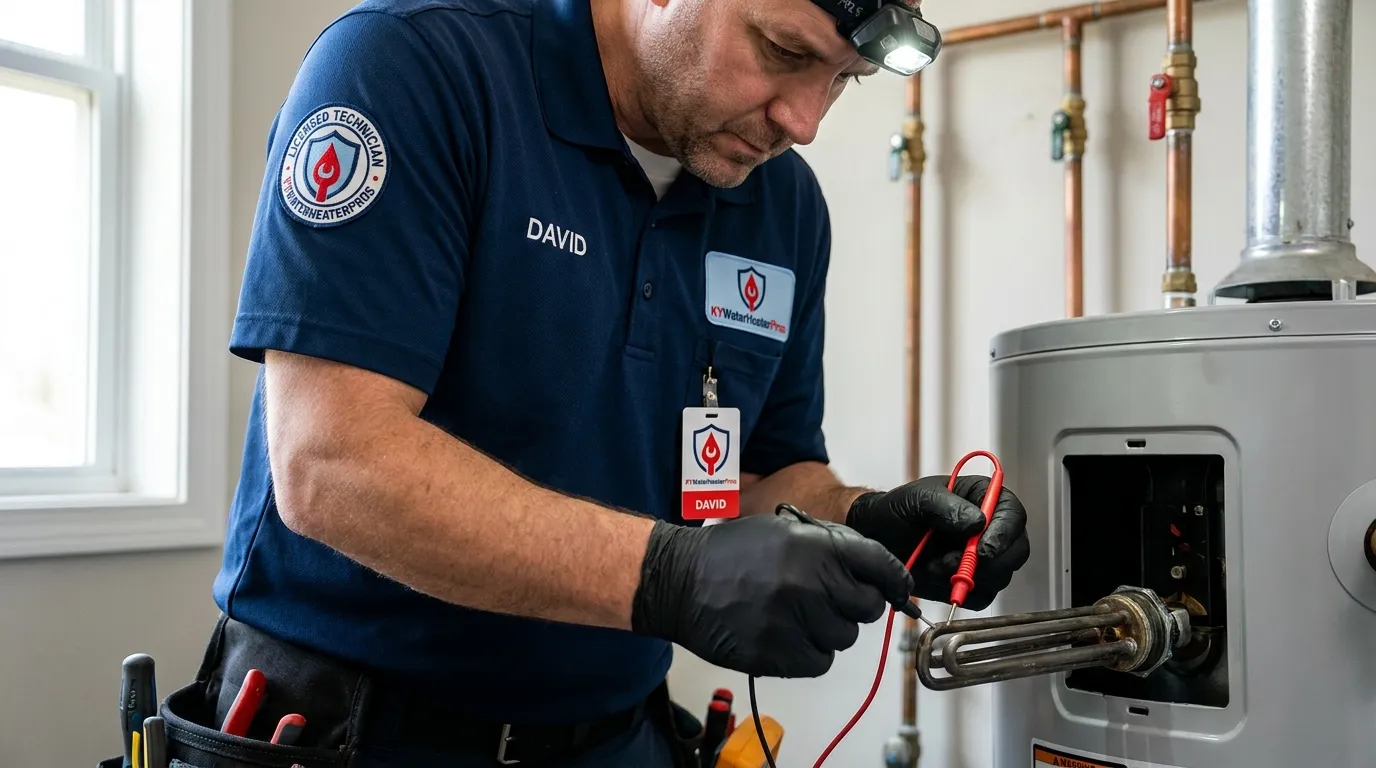
Heating elements burn out from mineral buildup or power surges. Lower elements fail first because sediment concentrates at tank bottom. A failed lower element produces lukewarm water since only the upper element heats the top third of the tank. Upper element failure leaves you with one hot shower before depleting the tank. Element replacement runs $200-$350 depending on access and whether both elements need changing.
Gas valves control burner operation and fail mechanically or electronically. Symptoms include pilot light that won't stay lit after thermocouple replacement, weak flames, or failure to ignite. Gas valve replacement costs $300-$450 and becomes cost-prohibitive on tanks over 10 years old where replacement makes more financial sense.
Anode rods sacrifice themselves to corrosion, protecting the tank lining. Once depleted, tank corrosion begins and produces rusty water. Anode rod replacement every 3-5 years extends tank life by 5-7 years and costs $150-$250. Most homeowners skip this maintenance until rust appears—at which point internal tank corrosion has progressed beyond saving.
Pressure relief valves fail through mineral deposits that prevent proper sealing. A dripping TPRV indicates a valve nearing failure or excess system pressure from a missing expansion tank. Replacement costs $150-$200 and should happen immediately since a stuck-closed valve creates catastrophic burst risk.
Maintenance: Extending Tank Lifespan
Annual maintenance extends tank life and prevents emergency failures. Drain and flush removes sediment that insulates heating elements, forcing them to overheat and fail prematurely. Homes with hard water or well systems need flushing every 6-12 months; municipal soft water allows 12-18 month intervals.
Flushing involves attaching a garden hose to the drain valve, opening it fully, and running water until it flows clear—typically 10-20 gallons for light sediment, more for neglected tanks. Severe buildup requires multiple drain-and-refill cycles. Contractors charge $150-$200 for professional flushing that includes burner inspection, thermocouple cleaning, and pressure valve testing.
Anode rod inspection requires removing the hex head from the tank top—a job complicated by decades of corrosion bonding threads. Rods showing less than 1/2 inch of exposed core wire need replacement. Powered anode rods eliminate this maintenance by using electrical current instead of sacrificial metal, though they add $300-$400 to installation cost.
Test pressure relief valves annually by lifting the test lever to confirm water discharges. If no water flows or the valve continues dripping after testing, replace immediately. Never ignore a weeping TPRV—it signals excess pressure the valve can't control or a failing valve that may not open during a true overpressure event.
Sizing Calculations for Lyndon Households
Proper sizing balances peak hour demand against recovery rate. The industry standard First Hour Rating (FHR) indicates how many gallons a tank delivers in the first hour of heavy use. A household of four typically needs 60-70 gallon FHR to cover morning showers, dishwashing, and laundry startup.
Calculate your FHR need by counting fixtures used during peak hour: 10 gallons per shower, 6 gallons per shaving/washing, 2 gallons per tooth-brushing, 14 gallons per dishwasher cycle, 25 gallons per clothes washer load. Sum the gallons used in your busiest hour. Choose a tank with FHR meeting or exceeding this number.
A 40-gallon gas tank typically provides 60-70 gallon FHR. A 50-gallon model delivers 75-85 FHR. Electric tanks recover slower, so a 50-gallon electric offers roughly the same FHR as a 40-gallon gas. Upgrading from 40 to 50 gallons costs only $100-$150 more installed but eliminates capacity complaints in growing families.
Homes with high-volume tubs (80+ gallon capacity) or large families need 75-80 gallon tanks to avoid mid-bath cold water. Vacation rentals or multi-generational homes may justify dual 40-50 gallon tanks plumbed in series for increased capacity and redundancy if one unit fails.
When Replacement Beats Repair
Age determines the repair-versus-replace calculation. Tanks under 6 years old with single component failures merit repair since the tank lining remains sound and most parts still function. Units 8-10 years old with multiple issues—leaking fittings, failed elements, rusty water—signal approaching end-of-life where repair costs approach 50% of replacement cost.
Rust-colored hot water indicates internal tank corrosion after anode rod depletion. Once rust appears, the tank will fail within months to two years regardless of other repairs. Leaks from the bottom or sidewall mean tank perforation from internal corrosion—these leaks never seal and worsen rapidly. Bottom-out failures flood basements and ruin belongings, making proactive replacement the wise choice once internal corrosion begins.
The "50% rule" guides smart decisions: if repair costs exceed half the replacement price and the tank has reached 60-70% of expected lifespan, replace rather than repair. A $400 repair on a 9-year-old tank delays inevitable replacement by 1-2 years at best, wasting money better spent on a new unit with 10-12 year life expectancy and improved efficiency.
Energy efficiency upgrades pay for themselves over tank life. Replacing a 0.58 EF (Energy Factor) unit with a 0.67 EF model saves $80-$120 annually on operating costs. Over a 12-year lifespan, efficiency gains return $960-$1,440—offsetting a significant portion of the $900-$1,400 replacement cost.
Need a tank water heater installed, repaired, or replaced in Lyndon? Call +1-888-387-1216 for same-day service and transparent pricing from licensed professionals who work throughout Jefferson County.
Tankless Water Heater Services in Lyndon
Tankless water heaters provide endless hot water and last 20+ years, but they require expensive gas line or electrical upgrades in many older Lyndon homes. You save space. You gain endless hot water. But you pay 3x more upfront. Understanding whether tankless makes financial sense for your household starts with honest infrastructure assessment—not sales pitches about "never running out of hot water again."
Gas Line Volume Requirements for Lyndon Homes
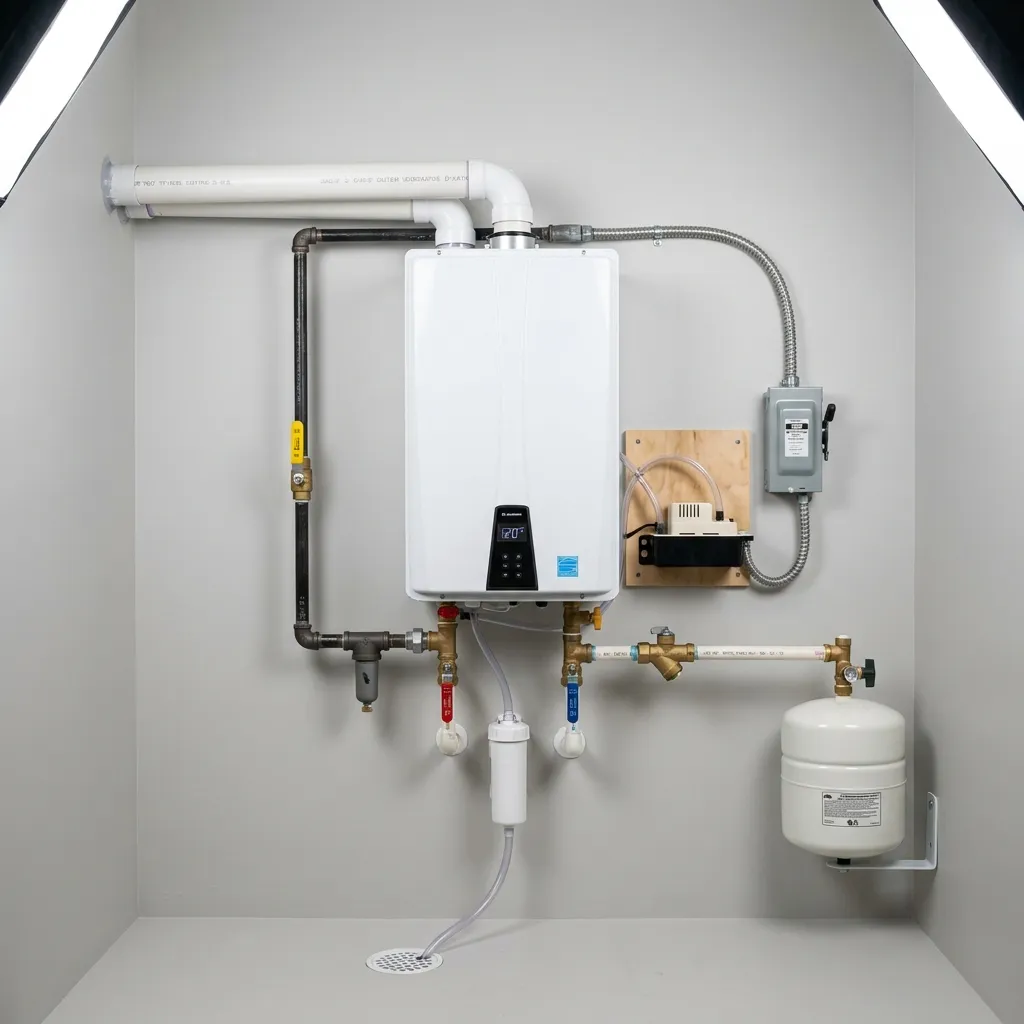
Most Lyndon homes built before 2000 have 1/2-inch gas lines sized for a 40,000 BTU tank water heater and a furnace. A whole-house tankless unit demands 180,000-199,000 BTU during operation. That requires a 3/4-inch gas line from the meter to the unit, often running 40-80 feet through crawlspaces, basements, or exterior walls. Gas line upgrades in Jefferson County typically cost $800-$1,500 depending on distance and routing complexity.
Some contractors suggest point-of-use tankless units to avoid gas line upgrades. A 40,000 BTU point-of-use unit serves one bathroom. Two bathrooms need two units. Three bathrooms need three units. You'll spend $2,400-$3,600 on equipment alone before installation, eliminating most cost savings versus a single whole-house gas tankless or a standard 50-gallon tank.
Electrical Circuit Requirements in Lyndon
Gas tankless units need a dedicated 15-20 amp circuit for the control board, ignition system, and exhaust fan. Older Lyndon homes with 100-amp panels often lack available breaker slots. Panel upgrades cost $1,500-$3,000 before the tankless installation begins.
Electric tankless units demand even more. A whole-house electric tankless requires 100-150 amps of dedicated capacity—three to four 40-amp double-pole breakers. Homes with 100-amp service cannot support an electric tankless without a full service upgrade to 200 amps. Total cost: $3,000-$5,000 for the electrical work alone, then $1,800-$2,800 for the tankless unit and installation.
Venting Material: PVC vs. Stainless Steel
Condensing tankless units (95%+ efficiency) vent through PVC pipes that can terminate through sidewalls. Non-condensing units (80-85% efficiency) require stainless steel venting through the roof because exhaust temperatures exceed PVC's heat tolerance. Condensing units cost $600-$900 more than non-condensing models but save $300-$500 on venting installation. In Lyndon homes with accessible sidewall venting routes, condensing tankless makes sense. In homes where PVC must run 30+ feet to reach an exterior wall, stainless steel roof venting often costs less overall.
The Cold-Water Sandwich Effect
When you turn on a faucet after the tankless has been idle, the unit fires and heats water. You get hot water. When you turn the faucet off briefly—say, to soap your hands—the unit shuts down. Residual hot water in the pipes reaches your faucet. Then cold water arrives for 3-8 seconds before the unit detects flow, reignites, and delivers hot water again. That's the cold-water sandwich: hot, cold, hot. It's most noticeable in point-of-use applications and homes with long pipe runs. Recirculation systems eliminate the problem but add $600-$1,200 to installation costs and increase gas consumption by 10-15%.
Required Annual Descaling in Lyndon
Tankless heat exchangers have narrow water channels that calcify when hard water heats above 140°F. In areas with water hardness above 7 grains per gallon, manufacturers require annual descaling to maintain warranty coverage. Descaling involves pumping white vinegar or citric acid through the unit for 45 minutes, flushing the system, and inspecting the heat exchanger for scale buildup. DIY descaling costs $30 in supplies. Professional descaling costs $150-$200. Skip it, and you void your warranty while scale reduces efficiency by 20-30% within two years.
Cold Groundwater Temperature Impact
In January, Lyndon's groundwater temperatures drop to 40-45°F. A 199,000 BTU tankless unit can heat water 70°F above incoming temperature at 5 gallons per minute. That delivers 110-115°F water at 5 GPM when groundwater is 40°F—enough for one shower. Two simultaneous showers split flow to 2.5 GPM each, and neither gets adequate hot water. Manufacturers rate units at 50°F incoming water temperature rise. Real winter performance falls 15-20% below summer performance in Kentucky.
Pre-1990 Electrical Panel Upgrade Requirements
Homes in Lyndon built before 1990 commonly have 100-amp electrical service with 20-24 breaker slots, most of them occupied. Adding a 15-amp circuit for a gas tankless often requires a subpanel ($800-$1,200) or full panel replacement ($1,500-$2,200). Electric tankless installations in pre-1990 homes almost always trigger service upgrades to 200 amps. Budget $4,000-$6,000 for electrical work before considering the tankless unit itself.
When Tankless Makes Financial Sense
Tankless pays off when:
- You have 150+ amp electrical service or accessible gas line upsizing routes
- Your household uses 80+ gallons of hot water daily (family of 4+ with high simultaneous demand)
- You're renovating and can absorb infrastructure costs into the larger project
- You plan to stay in the home 10+ years to recoup the premium through energy savings
Energy savings average $100-$150 per year compared to a standard tank water heater. At $2,500-$3,500 installed cost versus $1,200 for a 50-gallon tank, payback takes 10-15 years on energy savings alone. The endless hot water benefit matters more than efficiency for most households.
Repair Cost Reality
Tankless circuit boards fail. Flow sensors clog. Heat exchangers crack. Average tankless repair costs $300-$500 in Jefferson County—double the $150-$250 average for tank water heater repairs. Parts cost more. Diagnosis takes longer. Fewer plumbers stock tankless components. When your tankless fails on a Sunday morning, expect to wait until Monday for parts and pay $400-$600 for the service call, parts, and labor.
Freeze Protection Requirements
Tankless units installed in unheated spaces—garages, crawlspaces, outdoor alcoves—require freeze protection systems that drain the unit when temperatures drop below 40°F or maintain internal temperatures above freezing. Freeze protection kits cost $150-$300 and increase installation complexity. In Lyndon, outdoor tankless installations need windbreak enclosures and insulated venting to prevent freeze damage during winter cold snaps.
Call +1-888-387-1216 for a tankless installation assessment. We'll evaluate your gas line capacity, electrical service, venting routes, and household demand pattern to determine whether tankless delivers value or whether a high-efficiency tank serves you better at half the cost.
Tank or Tankless: What's Right for Your Lyndon Home?
Answer 7 questions for a personalized recommendation based on your home, budget, and hot water needs.
Question 1 of 7 — Budget (25% weight)
What's your budget range for a new water heater?
Considering a tankless water heater upgrade for your Lyndon home? Our licensed contractors in Jefferson County help you evaluate whether tank or tankless is the right fit based on your household size, gas line capacity, and local water conditions. Every estimate includes a free written quote with no obligation. Call +1-888-387-1216 to schedule your assessment.
24/7 Emergency Services in Lyndon
Emergency Water Heater Services in Lyndon
If you have no hot water, a burst tank, or a gas leak in Lyndon, our 24-hour emergency team can arrive quickly to stop the damage and restore safety. We dispatch licensed contractors across Jefferson County for after-hours calls, weekend emergencies, and holiday breakdowns when other plumbers close. From active flooding to pilot light failures at midnight, emergency response covers situations where delay means water damage, frozen pipes, or safety risk.
What Qualifies as a Water Heater Emergency
Not every water heater problem requires immediate response. Emergency service applies when delay creates safety hazards, property damage, or total loss of hot water during extreme weather. Gas odors near the water heater demand evacuation and a call to your utility company before contacting a plumber. Active tank leaks flooding your basement or crawlspace require immediate shutoff and emergency extraction to prevent structural damage, mold growth, and ruined belongings.
Burst tanks—when internal pressure overcomes weakened steel—release 40 to 75 gallons of scalding water within minutes. Homeowners in Lyndon neighborhoods with finished basements or water heaters installed above living spaces face particularly severe damage when tanks fail catastrophically. Carbon monoxide situations involving backdrafting water heater vents require immediate professional assessment after the fire department clears your home for re-entry.
Total hot water loss during winter qualifies as urgent rather than immediate emergency. When incoming water temperatures drop into the low 40s, a failed water heater leaves households without safe bathing water, effective dishwashing capability, or laundry function. Families with infants, elderly residents, or medical conditions requiring regular bathing need same-day restoration, not next-week appointments.
Emergency Response Capabilities Across Lyndon
Our 24-hour dispatch connects you with licensed contractors who stock common replacement parts, carry multiple tank sizes, and maintain emergency inventory for same-night installations when repair proves impossible. Response time varies by your location within Lyndon and current call volume, but emergency technicians aim for arrival within 60 to 90 minutes for true emergencies across Moorland, Bellemeade, Briarwood, Meadowbrook Farm, Wildwood, Plantation, Rolling Hills, Norwood, Langdon Place, Meadow Vale, Graymoor-Devondale, and Murray Hill.
Contractors responding to emergency calls perform immediate safety assessment before discussing repair options. Gas supply gets shut off if odors persist or valves show corrosion. Water supply gets isolated at the tank shutoff valve or main shutoff if the leak location makes tank-level shutoff ineffective. Electrical disconnect occurs before any diagnosis on electric water heaters to prevent shock hazards or further damage to control boards and heating elements.
Emergency diagnosis identifies whether your situation requires immediate repair, temporary restoration with next-day replacement, or full emergency installation when the tank has failed beyond repair. A tripped heating element can be replaced in 30 minutes, restoring hot water the same night. A 15-year-old tank with rust-through corrosion needs emergency replacement—a 3 to 5 hour process including old unit removal, new unit installation, permit acquisition if required by Jefferson County codes, and system testing.
After-Hours Pricing Reality
Emergency water heater service in Lyndon costs $100 to $250 more than standard business-hour calls. This premium covers after-hours dispatch, technician overtime rates, and the operational cost of maintaining 24/7 availability across Jefferson County. Expect emergency service calls to start at $200 to $300 for diagnosis, with that fee typically applied toward repair or replacement costs if you proceed with the work.
Emergency repairs—thermostat replacement, heating element swap, pressure relief valve installation—range from $250 to $500 depending on parts cost and labor complexity. Emergency tank replacements run $1,200 to $2,200 for standard 40 or 50-gallon units installed between 6 PM and 6 AM or on weekends and holidays. The premium buys immediate response when you need it, not next-Tuesday scheduling when your basement is already flooded.
Some situations justify the emergency premium; others do not. A gas leak or active flood demands immediate professional response regardless of cost. A water heater that stopped producing hot water at 9 PM on a Tuesday can often wait until morning for a standard-rate service call unless winter temperatures or household circumstances create genuine hardship.
Leak Containment and Water Damage Prevention
When water heaters leak, the source determines urgency and required response. Top-mounted connection leaks—at the cold water inlet, hot water outlet, or pressure relief valve—often result from loose fittings or failed gaskets. These leaks typically drip rather than gush, allowing time for bucket placement and morning repair. Bottom tank leaks signal internal corrosion and imminent tank failure, requiring immediate water shutoff and emergency replacement.
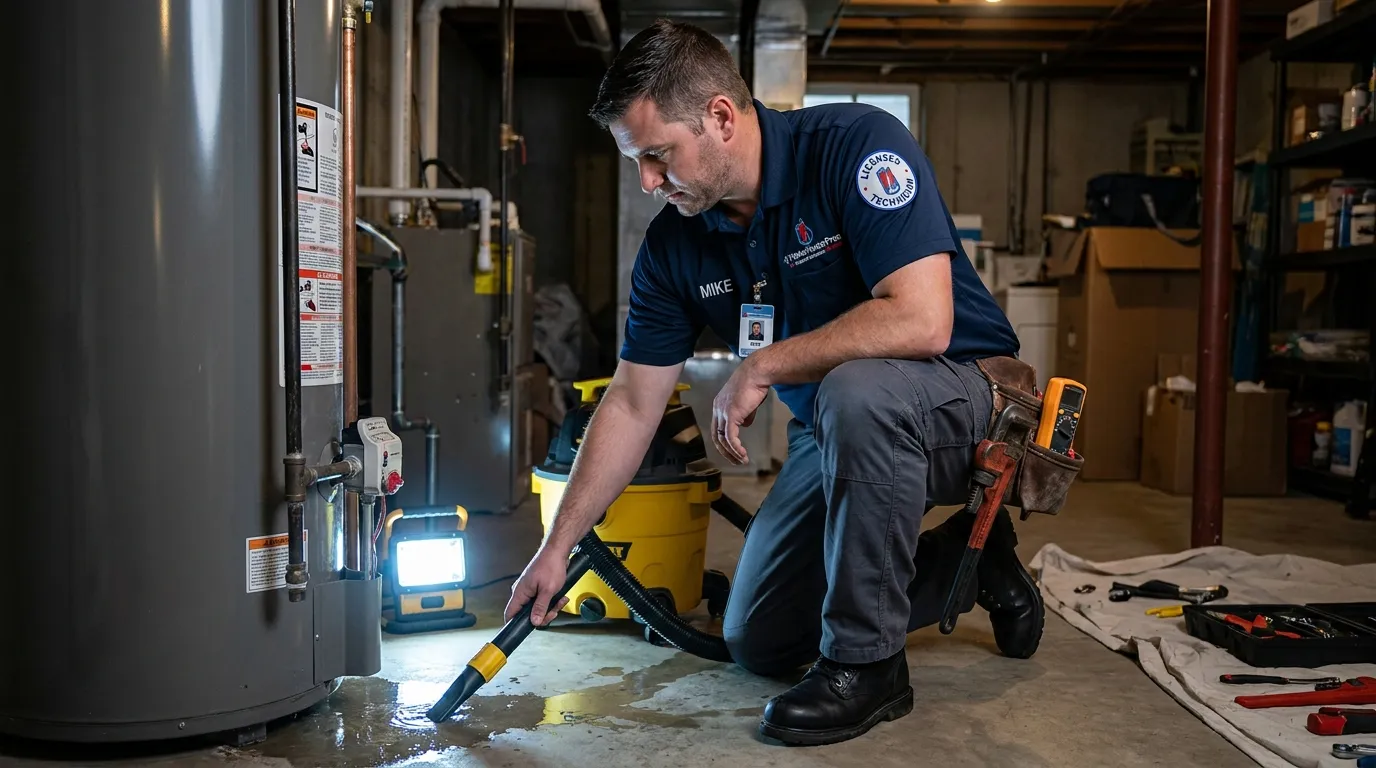
Emergency contractors carry water extraction equipment for active flooding situations. Removing standing water within the first few hours prevents subfloor damage, protects finished basement spaces, and reduces mold risk in the 24 to 48-hour window when spores begin colonizing damp materials. Water heaters installed in attics or second-floor closets create special urgency when they leak, as water migrates through ceiling drywall into living spaces below.
Drain pans installed beneath water heaters catch minor leaks and slow major ones, buying homeowners time to respond before water spreads across basement floors or soaks into carpeting. If your Lyndon home has a water heater without a drain pan, emergency replacement includes pan installation to meet current code and protect against future leak damage.
Gas Shutoff and Electrical Disconnect Procedures
Natural gas water heaters have a dedicated shutoff valve on the gas supply line within 6 feet of the unit. This valve turns 90 degrees to stop gas flow during emergencies. If you smell gas and cannot locate this valve quickly, leave your home and call your gas utility—do not search for valves while breathing natural gas. Emergency plumbers verify complete gas shutoff before beginning any diagnostic or repair work on gas water heaters.
Electric water heaters require circuit breaker shutoff before any component access. The breaker controlling your water heater typically carries a 30-amp rating for standard residential tanks. If you hear buzzing, smell burning, or see water near electrical connections, shut off the breaker immediately and call for emergency service. Water and electricity create electrocution hazards that demand professional assessment before restoration attempts.
Common Emergency Scenarios We Handle
Burst pressure relief valve discharge: The temperature-pressure relief valve protects against tank over-pressure by releasing water when internal pressure exceeds safe limits. When this valve discharges continuously, the water heater's thermostat may have failed, overheating water beyond safe temperatures. This situation requires immediate shutoff and thermostat replacement or full tank replacement if the thermostat failure indicates broader control system problems.
Pilot light failures during cold snaps: Pilot lights extinguish when thermocouple sensors fail, draft conditions worsen, or gas pressure drops. A pilot that won't stay lit after three relight attempts typically needs thermocouple replacement—a repair most contractors complete within an hour. Persistent pilot failures during extreme cold may indicate inadequate combustion air supply, a problem requiring vent inspection and correction.
Rumbling or popping sounds escalating rapidly: Sediment accumulation on tank bottoms creates popping sounds as trapped water beneath the sediment layer boils and escapes. These sounds worsen over time but rarely constitute immediate emergency. If popping suddenly intensifies or transitions to rumbling that shakes nearby walls, the tank may be near failure from advanced corrosion weakening its structure. This scenario justifies emergency assessment.
No hot water with recent weather events: Power outages kill electric water heaters until electricity returns. Natural gas water heaters lose pilot lights during power outages if they lack electronic ignition systems. After power restoration, electric water heaters resume heating automatically, but gas water heaters with standing pilots require manual relighting. If your gas water heater won't relight after a power outage, the thermocouple likely failed during the shutdown—a common emergency call after storm events across Lyndon.
When to Wait for Standard-Hours Service
Not every water heater problem demands emergency rates. A tank that stopped heating water at 8 PM when outdoor temperatures sit at 50°F and you have no immediate hot water needs can wait until morning for diagnosis at standard rates. Lukewarm water—indicating a failed heating element on a dual-element electric tank—rarely constitutes true emergency unless household circumstances demand immediate restoration.
Water heaters approaching 10 to 15 years old that stop working have likely reached natural end-of-life. While inconvenient, this scenario allows time for proper research, competitive quotes, and scheduled installation rather than emergency replacement at premium rates. Use the overnight hours to research tank versus tankless options, efficiency ratings, and sizing needs so morning calls produce informed decisions rather than rushed installations.
Preventive replacement of aging water heaters eliminates emergency scenarios. If your Lyndon water heater has reached 12+ years of service, schedule replacement before failure occurs. Planned installations cost $800 to $1,500 for standard tanks versus $1,200 to $2,200 for emergency replacement of the same unit. The $400 to $700 savings buys peace of mind and eliminates the stress of 2 AM phone calls and flooded basements.
Call +1-888-387-1216 now for immediate emergency dispatch across Lyndon, or schedule next-day service if your situation allows standard-rate response.
Water Heater Installation in Lyndon
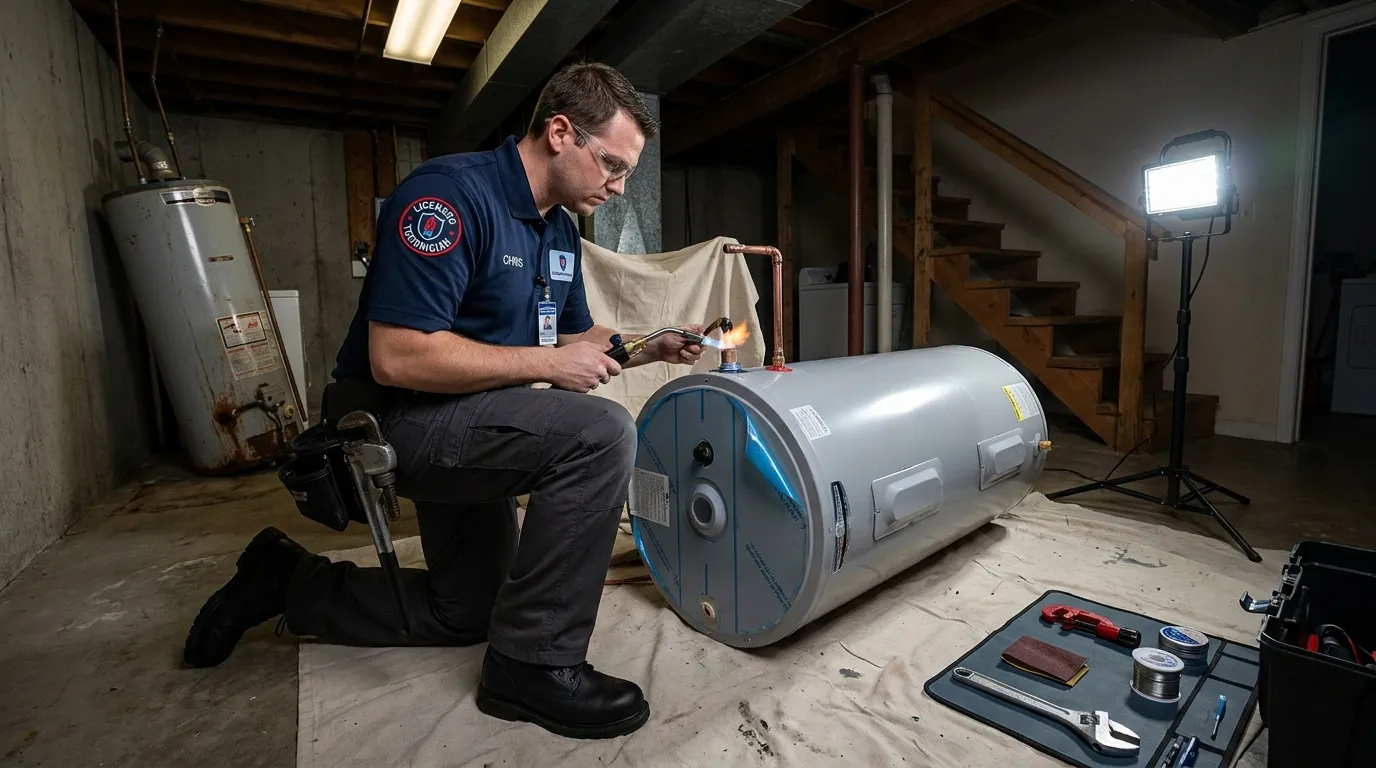
Most standard tank replacements in Lyndon take 2-4 hours, but you should budget a full morning to account for county permit pickup, gas line testing, and code upgrades. The old tank comes out. The new code-compliant piping goes in. An expansion tank gets added if your system didn't have one. The inspector shows up the next business day to verify everything meets current Kentucky code.
The Day of Installation
Your installer arrives with a new tank, expansion tank, discharge piping, code-compliant vent connectors, and earthquake straps if required by Jefferson County code. The first hour is removal: draining the old unit, disconnecting gas or electric supply, cutting the old water lines, and hauling the tank out. Most Lyndon homes have 40 or 50-gallon tanks in basements, garages, or utility closets—crawlspace installations add 30-60 minutes for access difficulty.
The next two hours are installation. The new tank goes in. Gas lines get reconnected and pressure-tested with soapy water or a digital detector. Cold water supply and hot water outlet get soldered or PEX-crimped. The temperature-pressure relief valve discharge pipe gets routed to terminate within 6 inches of the floor—no exceptions, per Kentucky code. An expansion tank mounts on the cold supply line if your system is closed (has a backflow preventer or pressure-reducing valve). Earthquake straps secure the tank if local code requires them.
Venting takes the most time on older homes. Single-wall vent connectors get replaced with double-wall B-vent. Shared vents with furnaces get separated if current code prohibits sharing. Atmospheric vent water heaters need proper draft—your installer checks with a match or smoke pencil. Power vent units need dedicated PVC or CPVC exhaust routed through an exterior wall, with proper slope and clearances.
Code Upgrades You Should Expect
Kentucky adopted the 2018 International Residential Code with state amendments, but Jefferson County may enforce additional requirements. Here's what typically gets added during replacement even if your old system didn't have it:
Expansion tanks are mandatory for closed plumbing systems. If your home has a backflow preventer on the main water line or a pressure-reducing valve, thermal expansion has nowhere to go when water heats and expands inside the tank. Without an expansion tank, pressure spikes to 150+ PSI, blowing relief valves and shortening tank lifespan. Expect to add one during installation—$150-$200 installed.
TPRV discharge piping must terminate within 6 inches of the floor, pointed downward, with no threads on the end. Old installations often had discharge pipes pointing into buckets or ending mid-air. Inspectors fail installations where discharge pipes don't meet code. Your installer runs new CPVC or copper to the floor—$75-$150 depending on distance.
Drain pans are required under water heaters in attics, second floors, or anywhere a leak would damage finished living space. The pan needs a drain line routed to a floor drain, exterior, or visible location. If your Lyndon home has the water heater in an attic or upstairs closet, budget $100-$150 for a drain pan with piping.
Earthquake straps secure tanks to wall studs in seismic zones. Kentucky has low seismic risk, but some counties near the New Madrid fault zone enforce strapping. Two straps—one in the upper third, one in the lower third—prevent tanks from tipping during earth movement. Cost: $50-$75 if required.
Combustion air requirements vary by installation location. Atmospheric vent gas water heaters pull combustion air from the room. If your water heater is in a closet or confined space, code requires either two permanent openings (one high, one low) or a single opening with a duct to outdoor air. Closet installations in Lyndon homes often need louvered doors or ductwork added—$100-$300 depending on complexity.
Permits and Inspections in Jefferson County
Water heater replacement requires a plumbing permit in Jefferson County. Your installer pulls the permit from the county building department before starting work. Permit fees typically run $50-$150 depending on the county and whether the work includes gas line modifications.
Inspections happen the next business day in most cases. The inspector verifies tank size matches permit, venting complies with code, expansion tank is present if required, TPRV discharge terminates correctly, and gas connections have no leaks. If the inspector finds code violations, your installer returns to correct them before final approval. Reputable contractors know local code and pass on the first visit.
What You Need to Do Before Installation
Clear a path from your driveway or street entrance to the water heater location. Installers carry 200-400 pound tanks on appliance dollies—narrow hallways with furniture or stored items add time and difficulty.
Turn off gas at the meter or shut off the circuit breaker if you have an electric unit. Most installers do this on arrival, but having it done prevents confusion.
Drain any stored items from around the water heater. Installers need 3-4 feet of clearance on all sides to work safely. Boxes, holiday decorations, and shelving units need temporary relocation.
Test your main water shutoff valve before installation day. If it hasn't been turned in years, it may leak or fail when operated. Better to discover a bad shutoff valve beforehand than during installation when water is already drained from the system.
Hidden Costs That Surface During Installation
Gas line modifications add $300-$800 if your existing 1/2-inch line can't supply enough volume for a larger tank or power vent unit. Code requires proper gas line sizing based on BTU demand and length of run—undersized lines cause burner performance problems and fail inspection.
Water line replacement becomes necessary when old galvanized pipes show corrosion at connection points. Cutting corroded galvanized often reveals paper-thin walls ready to fail. Re-piping with copper or PEX adds $200-$500 depending on how much line needs replacement.
Electrical circuit upgrades are required for power vent gas units (which need 120V for the blower motor) or if you're switching from gas to electric. Electric water heaters draw 20-30 amps at 240V—if your panel has no open breaker slots or your home still has a 100-amp service, you face $150-$400 for circuit work or more for panel upgrades.
Vent modifications for power vent conversions cost $400-$800 when you're switching from atmospheric to power vent. Power vent units exhaust through PVC rather than metal flues, requiring new penetrations through exterior walls and proper termination clearances from windows, doors, and air intakes.
Disposal and Cleanup
Your installer hauls the old tank away as part of the installation. Kentucky scrap yards accept water heater tanks after draining—copper and brass fittings get recycled. Some municipalities offer appliance recycling programs with free pickup for residents. Ask about disposal during your quote—most contractors include it, but some charge $25-$50 if the tank has unusual access challenges.
Post-installation cleanup includes removing old piping, fittings, and packaging materials. Professional installers sweep and wipe down the work area before leaving. You shouldn't find drained water, cardboard, or cut pipe sections left behind.
Call +1-888-387-1216 for a site assessment and installation quote. We'll walk you through permit requirements, code upgrades specific to your home, and realistic timelines for Lyndon installations.
Water Heater Installation in Lyndon
Whether you're replacing a failing unit or upgrading to a more efficient model, our licensed contractors handle the entire installation process — from pulling permits to scheduling the final city inspection.
Permits & Code Compliance
We pull all required Lyndon permits. Installations include expansion tanks, TPRV discharge piping, and proper venting per current Kentucky code.
Old Unit Removal
We disconnect, drain, and haul away your old water heater. All disposal is environmentally compliant — included in every installation quote.
Gas & Electric Options
We install both gas (atmospheric & power vent) and electric water heaters. We'll recommend the right size — 40, 50, or 75 gallon — based on your household demand.
Final Inspection
After installation, we schedule the city/county inspection for you. We stay until the inspector signs off — ensuring everything passes on the first visit.
Installation Timeline
Day 1: Assessment
We inspect your current setup, measure for the new unit, and provide a written quote.
Day 1–2: Permit & Parts
We pull the permit and source the exact water heater model you selected.
Day 2–3: Installation
Most installations complete in 3–5 hours, including removal, connections, and testing.
Day 3–5: Inspection
City/county inspector verifies code compliance. We handle the scheduling.
Water heater installation in Lyndon, KY requires proper permitting through theJefferson County building department. Our contractors pull all required permits, install to current Kentucky plumbing code, and schedule the final inspection on your behalf. Expansion tanks, TPRV discharge piping, and code-compliant venting are included in every installation. Get your free installation quote at +1-888-387-1216.
Water Heater Repair in Lyndon
If your water heater is less than 6 years old and isn't leaking from the tank itself, a repair in Lyndon is likely the most cost-effective choice. Component failures—thermostats, heating elements, gas valves—cost $150-$400 to fix, while a full replacement runs $800-$3,500. The math changes fast after year 10 when multiple systems start failing and the tank shell corrodes from the inside out.
Diagnosing Common Component Failures
Thermostat failures show up as inconsistent water temperature or no heating at all. Electric units have two thermostats—upper and lower—that can fail independently. The upper thermostat controls the lower, so when it fails, nothing heats. Gas units use a single thermostat that regulates burner cycles. In Lyndon, thermostat replacement averages $180-$250 including the service call, taking 30-45 minutes once the tech identifies the problem.
Heating element burnout affects electric water heaters exclusively. Elements fail when sediment buildup on the element surface creates hotspots that burn through the metal casing. You'll notice partial heating—some hot water, but not enough, or water that starts hot then turns lukewarm. Replacing one element costs $200-$350 depending on wattage and whether the tech needs to drain the entire tank or just enough to access the failed element.
Gas valve malfunctions prevent burner ignition even when the thermostat calls for heat. The pilot stays lit, but the main burner won't fire. Gas valves combine multiple safety controls—the pilot generator, the main gas flow regulator, and the temperature sensor—so when one circuit fails, the entire valve assembly gets replaced. Expect $300-$400 for parts and labor because gas valve work requires precise gas line disconnection, pressure testing after reinstallation, and leak detection procedures.
Thermocouple replacement solves the most common pilot light problem: the flame lights but won't stay lit after you release the button. The thermocouple is a safety device that senses pilot flame heat and signals the gas valve to keep fuel flowing. When it fails—often from carbon buildup or simple metal fatigue—the pilot shuts off as soon as you stop manually holding the valve open. Replacement takes 20 minutes and costs $150-$180.
Pressure relief valve leaks create puddles around the tank base or constant dripping from the discharge pipe. The temperature and pressure relief valve opens at 150 PSI or 210°F to prevent tank explosion. Once the valve starts leaking—usually from mineral deposits on the valve seat—it won't seal properly even after pressure drops. Replacing a leaking relief valve costs $150-$200 and prevents the dangerous condition of a blocked relief system.
Anode rod depletion causes rusty or brown-tinted hot water as the tank's steel shell begins corroding. The sacrificial anode rod—magnesium or aluminum core wire—attracts corrosive elements in the water, protecting the tank. When the rod depletes completely, corrosion attacks the tank lining instead. Caught early, anode rod replacement ($200-$250) extends tank life 3-5 years. Caught late, after rust colors the water, the tank damage is often irreversible and replacement becomes necessary.
Repair vs. Replacement: The Decision Framework
Age under 6 years: Repair almost always makes sense. The tank shell is still sound. Warranties often cover parts. A $300 heating element repair on a 4-year-old tank preserves 6-8 years of remaining life.
Age 6-10 years: Cost versus benefit analysis matters. A single $200 repair is sensible. Multiple failures totaling $500+ mean you're approaching 50% of replacement cost while buying maybe 2-3 more years. If the water heater has lived in your home without maintenance—no flushing, no anode rod changes—the tank interior is likely corroded and additional failures are imminent.
Age 10+ years: Replacement becomes the smart financial move even for seemingly simple repairs. That $250 thermostat fix on a 12-year-old tank might last 6 months before the heating element fails, then the relief valve starts leaking. You end up paying $800 in repairs over 18 months on a unit that fails completely right after, requiring emergency replacement at premium pricing.
Tank leaking from bottom or sides: This is not repairable. A crack in the steel shell or pinhole rust-through means the tank structure has failed. The leak will only worsen. Turn off the water supply, call for same-day replacement, and expect to pay emergency rates if the leak is actively flooding.
Cost Reality in Lyndon
Diagnostic fees run $75-$125 and typically get waived if you proceed with the repair. After-hours emergency service adds $100-$200 to the base repair cost. Parts availability affects timeline—common components like thermocouples and heating elements get installed same-visit, while specialty gas valves or control boards may require next-day parts delivery.
Multiple component failures during one visit don't stack labor costs linearly. If your water heater needs both a thermostat and heating element, expect $350-$500 total, not $250 + $350 separately, because the tech is already there, the tank is already drained, and the electrical is already accessed.
The repair timeline is immediate for no-hot-water emergencies and scheduled within 48 hours for non-urgent component failures. Because Lyndon basements are prone to flooding, a top-leak repair saves your drywall, flooring, and stored belongings from water damage that costs far more than the repair itself.
Call +1-888-387-1216 for same-day diagnostics. We'll tell you whether your water heater needs a $200 part or a $2,000 replacement—and we'll walk you through the math so you make the right choice.
Should You Repair or Replace Your Lyndon Water Heater?
Answer 6 quick questions for a data-driven recommendation based on your unit's condition and Lyndon water quality.
Question 1 of 6 — Age Factor (35% weight)
How old is your water heater?
Water Heater Repair in Lyndon
Most water heater problems can be diagnosed and repaired in a single visit. Here's what we see most often — and when it's smarter to replace instead of repair.
No Hot Water
Most common call. Usually caused by a failed thermocouple, heating element, or gas valve. Same-day repair in most cases.
Typical Cost: $150–$400
Leaking Tank
If the leak is from the T&P valve or a fitting, it's repairable. If the tank itself is corroded and leaking from the bottom, replacement is the only option.
Repair: $150–$350 | Replace: $1,200+
Inconsistent Temperature
Often a faulty thermostat or dip tube. Electric heaters may have a failed upper or lower element causing lukewarm water.
Typical Cost: $150–$350
Rumbling or Popping
Sediment buildup causing water to boil beneath the layer. A flush may fix it — but heavy buildup in old tanks often means replacement time.
Flush: $100–$200 | Replace if severe
Pilot Won't Stay Lit
Usually a thermocouple or pilot assembly issue. Quick repair — but if you smell gas, evacuate and call 911 first.
Typical Cost: $150–$250
Rusty or Smelly Water
Depleted anode rod allows tank corrosion. An anode rod replacement can extend tank life 3–5 years — if the tank hasn't started leaking yet.
Anode Rod: $150–$300
Repair vs. Replace: The Decision Framework
buildRepair Makes Sense When:
- The water heater is less than 8 years old
- The repair cost is under 50% of replacement
- The tank itself isn't leaking
- It's a single component failure (element, valve, thermocouple)
swap_horizReplace Makes Sense When:
- The unit is 10+ years old
- Tank is leaking from the body
- Multiple repairs in the past 12 months
- Repair cost exceeds 50% of a new unit
Most water heater repairs in Lyndon can be diagnosed and completed in a single visit. Whether it's a failed thermocouple, leaking T&P valve, or sediment buildup from Jefferson County'slocal water conditions, our Master Plumber-licensed technicians carry common parts on every truck. Same-day repair service is available — call +1-888-387-1216.
Lyndon Water Heater Cost Estimator
Get a personalized cost range based on your situation — no email required, no sales pitch.
Step 1 of 5
What service do you need?
Lyndon Water Heater Hiring Checklist
Select your situation and get a customized, screenshot-ready checklist for vetting contractors in Lyndon.
What type of service do you need?
Why Lyndon Homeowners Choose Us
We're not just another plumbing company. Every job is backed by Master Plumber licensing, manufacturer warranties, and a commitment to doing the work right the first time.
KY Master Plumber Licensed
Every contractor carries a Kentucky Master Plumber license — not just a general plumbing cert. Trained specifically on water heater code compliance, gas line safety, and local regulations.
True 24/7 Emergency Response
Midnight burst tank? Gas leak at 5 AM? We don't use an answering service — a licensed plumber responds to emergency calls within 30 minutes of your call, day or night.
Transparent, Written Quotes
No surprises. Every job starts with a written diagnostic + quote before any work begins. If the price changes, you approve it first — zero hidden fees, zero pressure.
Full Warranty Coverage
Every installation includes the manufacturer's full warranty plus our 1-year labor guarantee. If something goes wrong within a year of our work, we fix it — free.
Code-Compliant Installation
We pull all required permits and schedule inspections. Your installation meets current Kentucky building code — including expansion tanks, TPRV discharge, and proper venting.
Energy Efficient Options
We help you right-size your water heater and choose Energy Star certified models that qualify for Kentucky utility rebates — saving you money every month for years.
How It Works
From your first call to the final inspection, here's exactly what to expect.
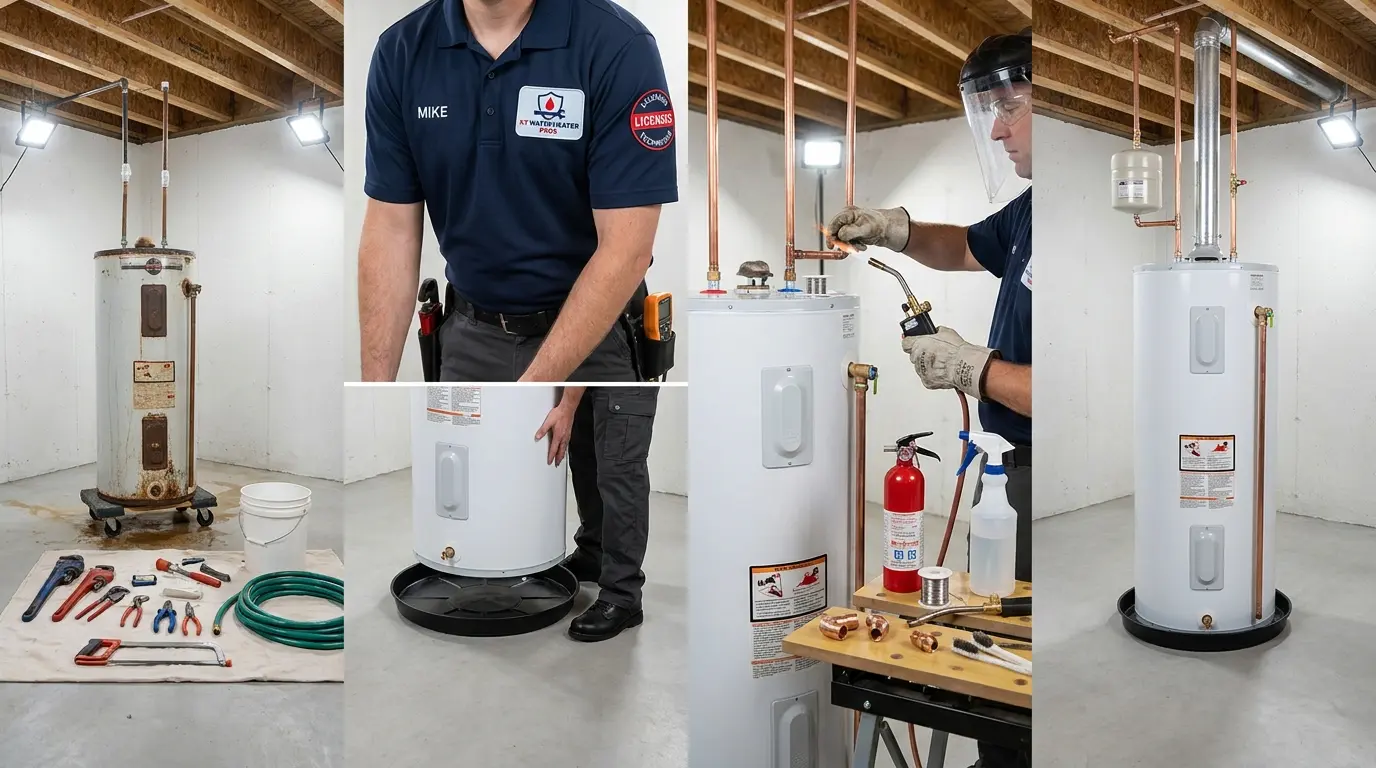
Call & Describe
Call +1-888-387-1216 and describe your water heater issue. We'll ask a few targeted questions to prioritize your call — emergency or scheduled.
On-Site Diagnosis
A licensed plumber arrives, inspects your water heater, and gives you a written diagnosis with all options and costs — before any work starts.
Approve & Execute
You choose the option that fits your budget. We handle permits, parts sourcing, old unit disposal, and the work itself — all in one visit when possible.
Inspect & Warranty
We test the system, walk you through operation, and provide warranty documentation. For installations, we schedule the city inspection for you.
Transparent Pricing for Lyndon
No hidden fees. Every job starts with a written quote — here are typical ranges so you know what to expect.
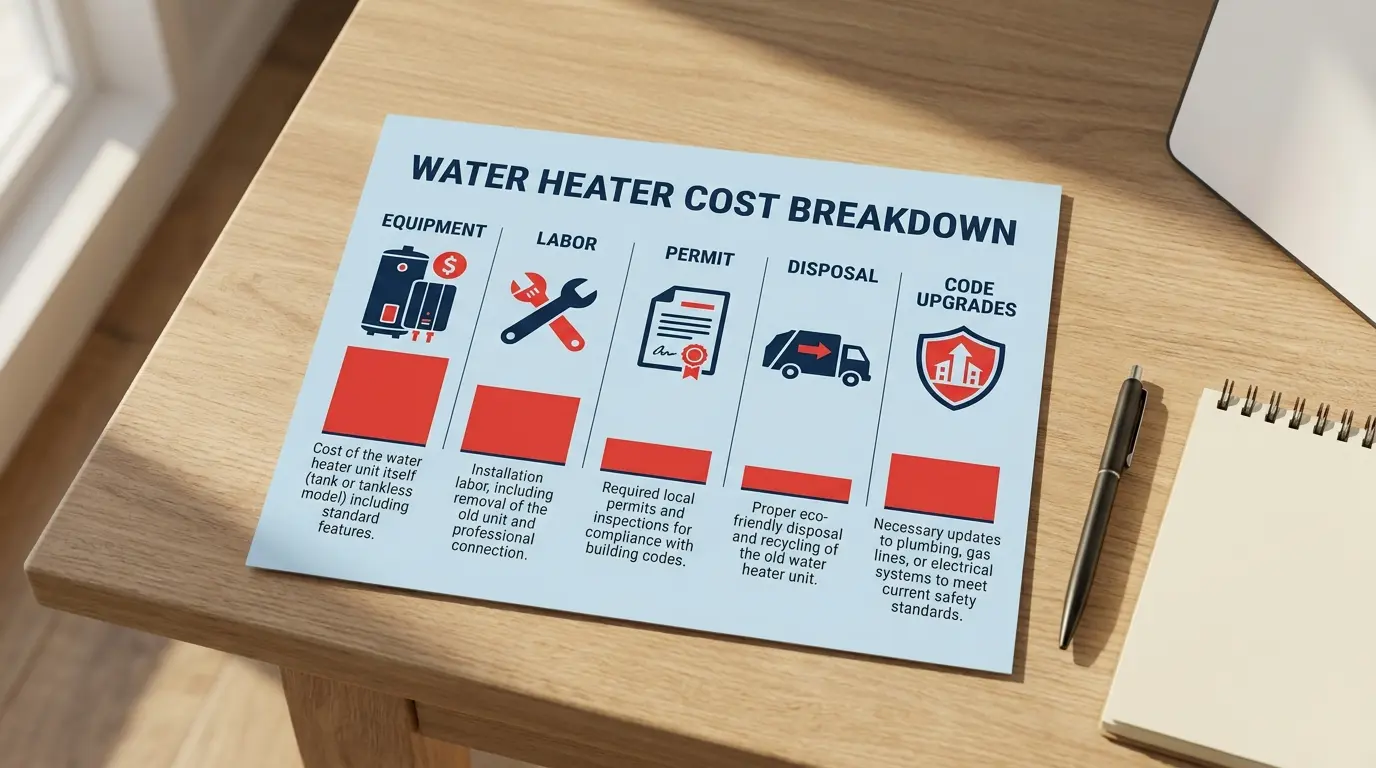
Repair
$150–$600
Typical repair range
- check_circleThermocouple & pilot assembly: $150–$250
- check_circleHeating element: $150–$300
- check_circleGas valve: $250–$450
- check_circleT&P valve: $150–$250
- check_circleAnode rod: $150–$300
Tank Installation
$1,200–$2,500
Installed with permits
- check_circle40-gal gas: $1,200–$1,800
- check_circle50-gal gas: $1,400–$2,000
- check_circleElectric 50-gal: $1,200–$1,800
- check_circleAll permits & disposal included
- check_circleCode compliance upgrades included
Tankless Installation
$3,000–$5,500
Installed with gas line upgrades
- check_circleIndoor gas: $3,000–$4,500
- check_circleOutdoor gas: $2,800–$4,000
- check_circleElectric tankless: $2,500–$3,500
- check_circleGas line sizing included
- check_circleRecirculation pump available
infoKentucky Utility Rebates: Many Lyndon utility companies offer $200–$750 rebates on high-efficiency and ENERGY STAR water heaters. We'll help you identify and apply for every rebate you qualify for.
Lyndon water heater pricing varies based on unit type, installation complexity, and whether your Jefferson County home requires code upgrades. We provide transparent, written quotesbefore starting any work — no hidden fees, no pressure. Many Kentucky utility companies offer $200–$750 in rebates on high-efficiency models, and we'll help you apply. Call +1-888-387-1216 for your personalized quote.
Nearby Cities We Serve
We also serve these communities near Lyndon — all within 20 miles.
Junction City
Boyle Co.
Russell
Greenup Co.
Eddyville
Lyon Co.
Paris
Bourbon Co.
Warsaw
Gallatin Co.
London
Laurel Co.
Mount Sterling
Montgomery Co.
Park Hills
Kenton Co.
Williamsburg
Whitley Co.
Cave City
Barren Co.
West Liberty
Morgan Co.
Lebanon
Marion Co.
Newport
Campbell Co.
Benton
Marshall Co.
Independence
Kenton Co.
Find Water Heater Service in Your Kentucky City
We connect homeowners across all 120 Kentucky counties with licensed Master Plumber contractors. Search for your city or browse below.
Louisville
Jefferson County
Pop: 1,022,630
Lexington
Fayette County
Pop: 321,354
Bowling Green
Warren County
Pop: 98,537
Elizabethtown
Hardin County
Pop: 78,446
Owensboro
Daviess County
Pop: 73,115
Covington
Kenton County
Pop: 40,930
Georgetown
Scott County
Pop: 36,281
Richmond
Madison County
Pop: 34,662
Florence
Boone County
Pop: 31,699
Nicholasville
Jessamine County
Pop: 31,066
Hopkinsville
Christian County
Pop: 30,771
Jeffersontown
Jefferson County
Pop: 28,800
Frankfort
Franklin County
Pop: 28,479
Independence
Kenton County
Pop: 28,256
Henderson
Henderson County
Pop: 28,201
Paducah
McCracken County
Pop: 26,248
Radcliff
Hardin County
Pop: 22,839
Ashland
Boyd County
Pop: 21,695
Madisonville
Hopkins County
Pop: 19,533
Erlanger
Kenton County
Pop: 19,506
Frequently Asked Questions
Honest answers to the questions Lyndon homeowners ask most.
How much does a water heater replacement cost in Lyndon?
expand_more
How long does a water heater installation take?
expand_more
Should I repair or replace my water heater?
expand_more
Do you offer tankless water heater installation?
expand_more
Do I need a permit for a water heater in Lyndon?
expand_more
What brands do you install?
expand_more
Is your emergency service really 24/7?
expand_more
Ready to Solve Your Lyndon Water Heater Problem?
Our licensed contractors respond to Lyndon emergency calls within 30 minutes — 24 hours a day, 7 days a week. For planned replacements, get a free written quote today.
verified_userAll contractors verified for Kentucky Master Plumber License and required insurance.